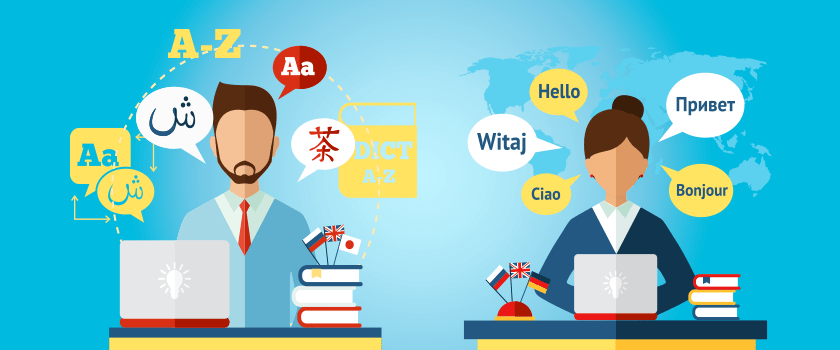
The healthcare development of Dubai has been finalized with superior rates over the past decade, which has already made the city a major tourism hub that attracts medical tourists, a pharmaceutical development hub as well as a treatment hub of high quality. The necessity of proper medical communication has never been so acute as it is currently, where patients, professionals, and healthcare companies tend to flock this land with people, everywhere across the globe. Medical translation plays a crucial role in the process of translating significant information to be understood in a language. However, this is not a profession that is only about a mere language ability. Certified linguists require a vast industry knowledge, cultural insight and regulatory knowledge in order to translate medical information in Dubai. Any misunderstanding of the medical information can have ineffective health outcomes, legal violation or professional malpractice, so the accuracy formula is imperative.
The Threatening Nature of Medical Translation
Medicine translation is one of the fields that presents sensitive and complex content that could affect the safety of the patients, treatment successes and adherence. This means that the healthcare environment of Dubai presupposes the multilingual correspondence of hospitals, clinics, pharmaceutical companies, insurance companies and control agencies. Such examples as the medical drugs, diagnostic outcomes, surgical instructions, the history of patients, the prescription data and clinical trials data must be translated on a word-to-word basis, since it may lead to misunderstandings.
Any mistranslated dosage, misinterpreted symptom or incorrectly translated lab result may be disastrous. There could not be any leeway in a profession that requires the decisions of clinical practice based on the correct information. It is based on this that the medical field of Dubai requires certified translators who understand the medical terminologies, anatomy, pharmacology and treatment therapy. Their experience renders the translated content sense, understandable and within a medical scope.
Censored Linguists should be regulated in the UAE.
The particular healthcare system in Dubai is subject to strict regulatory policies imposed by the different healthcare policy agents such as Dubai Health Authority (DHA), the Ministry of Health and Prevention (MOHAP) and free zone healthcare regulators. These organisations possess documentation, documentary standards, patient safety and ethical communication standards. These standards are needed in medical translations to be acceptable in the audit process, insurance claims and legal proceedings.
Certified medical translators in Dubai are required to work under these rules. They are able to pass qualifications and know the industry and therefore will come up with translations that entail compliance with the official guidelines. As an example, translation of drug labels, user manuals of medical apparatus or clinical trial reports must satisfy some medical and legal requirements. They can also be eliminated by unqualified translators, and the result of such work cannot be constant regarding regulatory doctors or even threaten the well-being of a patient. The certified linguists ensure that the healthcare providers are not intimidated by the regulatory expectations.
Precision and Readings are increased with experience in the Industry.
Medical translation is a strange phenomenon because it requires the knowledge of languages and the subject-matter knowledge, which is more profound. The translators must learn complex medical terms, and scientific lingo and medical processes. This is one of the examples of a translator who translates the documents connected with cardiology and must be familiar with cardiovascular anatomy and terminology used in the diagnosis. In the case when a linguist has to work with translations in oncology, he/she has to possess knowledge about the staging of cancer, cancer treatments and pathology terms.
The extent of specialisation of the healthcare system in Dubai has ensured that the expertise of the industry to ensure that technical words, abbreviations and other words dependent on contexts are read in their right sense. There is a tendency that medical jargon vary according to the country and field. Outside the domain of expert knowledge, a translator has a possibility of being mistaken in understanding words that seem to be similar, but which have varying clinical definitions. The certified translators will ensure that the medical concepts are translated properly to the health practitioners, patients and the regulatory authorities because of their knowledge in the industry.
Educating student nurses in Multilingual Patient Care and Medical Tourism.
The medical tourism in Dubai is one of the best in the global market, with most of its patients reaching Europe, Asia, Africa and the Middle East. Patients who do not speak similar languages are usually attended in hospitals and be assigned depending on documentation that is translated, such as the type of admission, type of consent, preoperative instructions and the final summative after the admission. Such translations should be accurate in order to ensure that the patients are fully aware of their rights, treatment plan and risks of medical conditions.
Certified medical translators are trained in order to present information to the patient and make it understandable and culturally aware. They ensure that the translated documents are easily understandable and do not negatively impact the accuracy that is required in the medical practice. This will facilitate improved patient outcomes as well as the strengthening of the image of Dubai as a secure and reliable place to obtain foreign healthcare.
Drug translations and Medical equipment Accuracy.
Dubai Medical equipment market and the drug market need to get the necessary translation to comply with the laws of the UAE and with the international standards. All the information leaflets on the products, procedures in the clinical studies, safety data sheets, the manufacturing instructions, dose directions, and the device usability manuals should be translated properly. Those papers are full of complex scientific terms and they must have similar phrases included in the whole regulatory filing, in the advertising material, and in the patient information.
The meaning of all words and the way that it works in relation to the safety of the drug or the functioning of a device is only known by a certified linguist who has the knowledge of the pharmaceutical sciences or biomedical engineering. They are correct and hence the professionals and patients receive correct information and reduce any adverse event, abuse, or regulatory non-conformity. It is the active healthcare economy of Dubai that is preconditioned by the presence of these specialists to provide the safety of products and high levels of care.
Giving Ethical and Secrecy Competencies.
Medical translation is a highly delicate and sensitive process. A strict adherence to ethical issues and privacy needs should be followed during the translation of patient history, diagnostic outcome and research data on clinical research. Certified medical linguists are taken to meet the regulations of secrecy and awareness of the legal implications of the incompetence of patient information.
These are extremely professional, which implies that the translation procedures do not disrupt the privacy of patients and are implemented in compliance with the regulations of data protection in the UAE. This constitutes one of the ethical tasks that improve the trust among the healthcare professionals, patients and translation dockets.